
For Families Who Are Exhausted
If you’re reading this, you’ve probably already been through a lot.
Maybe you’re the one who drives over every day. The one who gets the 2 a.m. calls. The one who has quietly taken over managing medications, meals, and safety, while holding down a job and raising your own family.
Dementia is relentless. It doesn’t pause for holidays. It doesn’t care that you’re already stretched thin. And the hardest truth many families face is this: the amount of love you have is not the problem. The problem is that dementia eventually requires care that no single family can safely provide alone, around the clock, every day, with specialized training.
Recognizing that isn’t giving up. It’s the most courageous thing a family can do.
6.7 Million
Americans are currently living with Alzheimer’s or dementia, a number projected to double by 2050.
11 Million
Unpaid family caregivers provide billions of hours of dementia care each year, often at severe cost to their own health.
70%
of family caregivers report wishing they had sought professional help sooner than they did.
Have Questions?
Ask Grace
Grace is our custom-built chatbot that was trained on the latest evidence-based practice and research on eldercare and dementia.
Learning about dementia and caring for an aging parent can be a daunting task for anyone, but for those who are needing answers quickly it can be even more stressful. We created Grace to help people overcome these hurdles and get the information that need fast, day or night.
What Dementia Actually Does, Day by Day
Understanding the progression helps families recognize when support has crossed from helpful to necessary.
The Weight Families Carry
Family caregivers of people with dementia experience significantly higher rates of depression, anxiety, and physical illness than the general population. Many delay seeking professional care because of guilt, a feeling that placing a parent somewhere is a betrayal. It is not. It is often the most loving decision a family ever makes.
You cannot pour from an empty cup. And you cannot provide safe dementia care without training, backup staff, and a secured environment. Recognizing that limit is wisdom, not failure.
A Practical Guide
Signs that professional dementia care may be needed
These are not failure milestones. They are signals that the level of care needed has grown beyond what one person or family can safely provide alone.
If several of these describe your situation, it may be time to consider a transition to a dedicated dementia care setting. Front Porch was built for exactly this moment. Schedule a call or tour today →
Our Approach
Trained dementia care changes the daily experience for your loved one, and for you.
Dementia does not follow a schedule. It affects appetite, sleep, behavior, and safety in ways that shift daily. Untrained caregivers, however devoted, often respond reactively. Trained dementia care is proactive: structured routines reduce anxiety. Consistent, familiar caregivers reduce agitation. Secured environments eliminate the risk of wandering. Purposeful activity replaces boredom that accelerates decline.
The difference between a chaotic day and a calm one is not luck. It is training, environment design, and staffing decisions made long before your loved one ever moved in.
At Front Porch, these are not programs. They are how we operate, every shift, every day.
How We Are Equipped
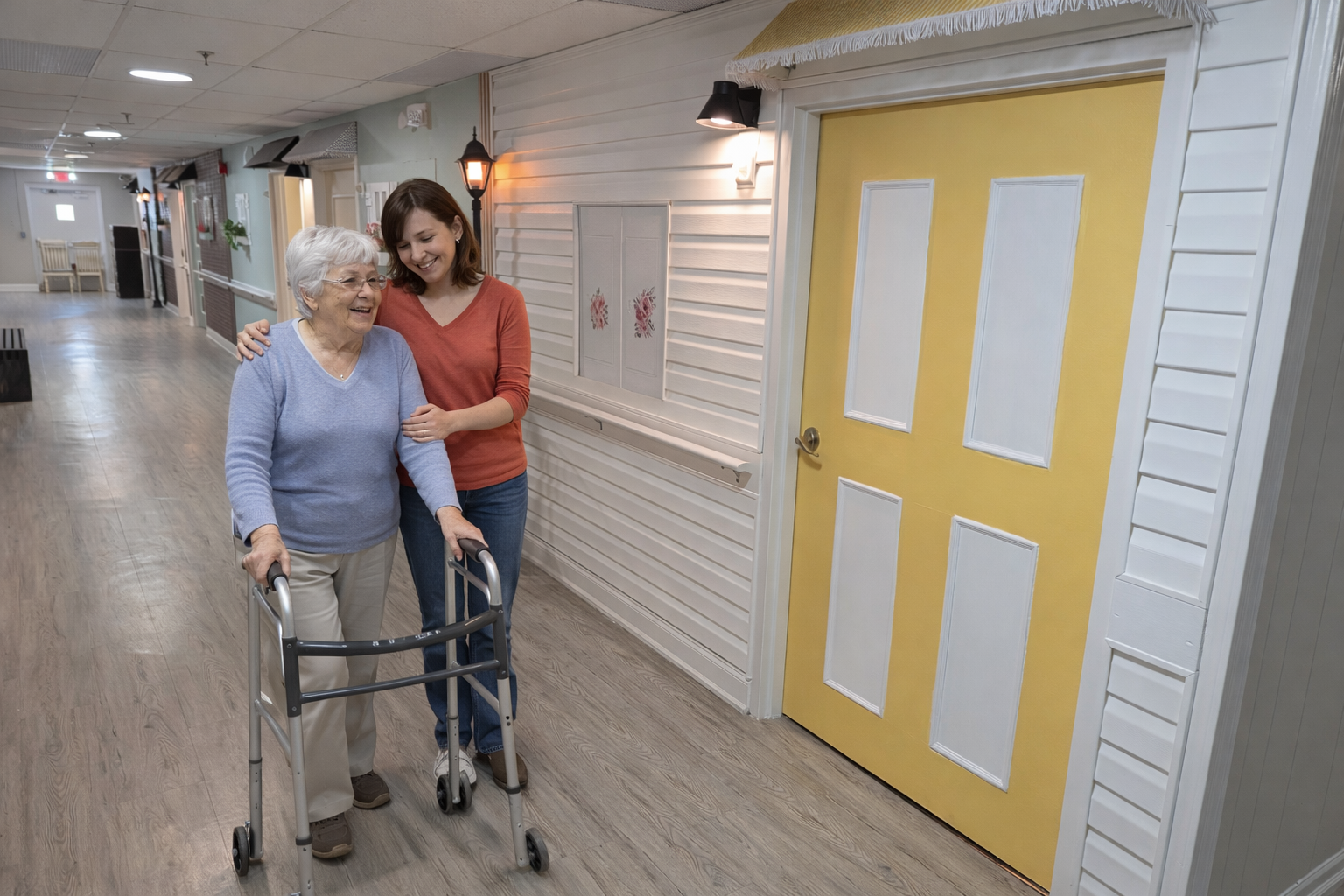
Front Porch was built around dementia care from day one.
We are not a general assisted living facility that added a memory care wing. Caring for those with cognitive decline is our focus. Every operational decision reflects that.
Small enough that every change gets noticed early, not after a crisis.
In a large facility, your loved one is one of many. Staff rotate. Subtle changes go unnoticed until they become crises. At Front Porch, our small census means caregivers know your parent’s preferences, their history, and their baseline. When something shifts, we catch it early and act.
That is not a feature. That is the entire model.
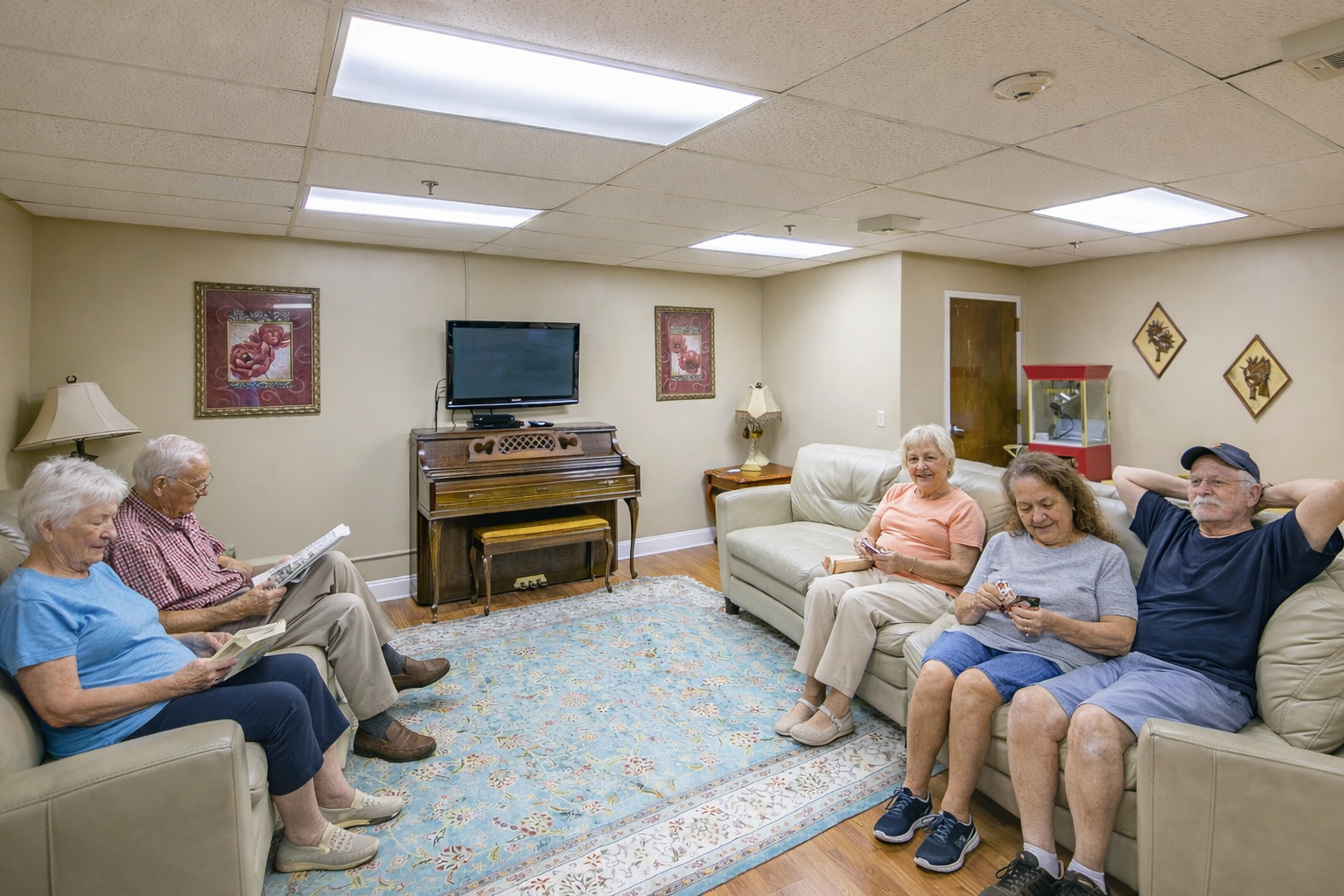
When your parent is safe, the relationship has a chance to heal.
Many families tell us the same thing a few weeks after admission: they stopped dreading visits and started looking forward to them again.
When your parent is safe, and it’s clear who is responsible for their care, the guilt begins to lift. You can be a daughter or son again, not an exhausted, terrified caregiver running out of capacity and can’t remember the last time they slept through the night.
That transformation matters. It is part of why we do this.
We have seen what a hard admission looks like. And we know what to do.
Families of residents with moderate to advanced dementia are sometimes told their loved one is ‘too difficult’, or asked to leave a facility after a short stay. If that has happened to you, you are not out of options. Our owner is a licensed RN who is involved in the day-to-day activities. Call before you assume we cannot help.
(770) 258-8600
Is Front Porch the right setting for your loved one?
Front Porch is a strong fit for seniors who are medically stable but are no longer safe at home due to dementia or cognitive decline. We work well with residents who have moderate to advanced dementia, including those who have been resistant to placement, have had behavioral episodes at other facilities, or who are transitioning directly from a hospital stay.
We are not the right fit for residents who require skilled nursing care, IV medications, or complex wound care. We will always tell you that honestly, and refer you to the right resource if we are not the match.
Ready to see if we’re the right fit?
Tours are Monday through Friday, 9 AM to 4 PM. Evenings and weekends by appointment. Bring your questions. We will answer every one honestly. Prefer to call? (770) 258-8600. We answer.